How the Essential Role of Risk Management Partnership Helped Launch Meharry’s African American DNA Study : Risk & Insurance
When Meharry Medical College reached out to Cecelia Rogers of Marsh Risk about creating an African American-only human genome database, she put her relationship skills to the test

Modern science is magical. It’s become so advanced, scientists and researchers can look at something seemingly innocuous — like spit — to find out if you have straight or curly hair, or if you’re more likely to crave sweets over spice. Blood draws can pinpoint your ancestry, so you can share what percentage Irish or Italian or Greek you might be.
This DNA deep dive also holds important information: the diseases or disorders that run in your bloodline.
Knowing about potential diseases you’re predisposed to can be a huge factor in prevention. But what does that mean for groups of people whose bloodlines were displaced? How about when modern-day science has traditionally studied disease effects on one race?
Meharry Medical College, the U.S.’s largest private, historically Black academic health science center, wants to change that narrative and address the disparities in medical treatments and drug development for people with African ancestry.
“Historically, people of African descent have been severely underrepresented in global genomic studies,” said Amber DuVentre, risk manager, Meharry Medical College.
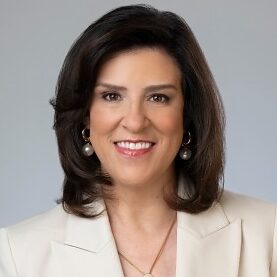
Cecelia Rogers, senior account executive, Marsh Risk
In fact, in large-scale genomic and disease studies, people of African ancestry only make up about 2.4-4% of participants, according to one study published by the National Human Genome Research Institute. That’s in contrast to 80-86% of European descendants in the same studies.
Meharry’s president, Dr. James E. K. Hildreth, Sr., is “a researcher,” per DuVentre. He saw the opportunity to dig into African American genetics at Meharry and jumped at the chance.
In 2025, the college launched the GREAT Health Study, or the Genomic Research Advancing Transformational Health Study — a human genome database of African American DNA. The goal is to study potential gene associations with prominent diseases or even help develop new treatments based on the research.
But like many innovations, in medicine and beyond, insurance played a key role in getting this from idea to fruition.
Is It Health Care?
Enter Cecelia Rogers, senior account executive, Marsh Risk. Rogers has been with Meharry since she started her career in 2016, the college being the very first client assigned to her book of business
When DuVentre reached out in 2020 about the potential for Meharry to create a human genome database, Rogers knew this was bigger than a new lab for the college: “When we had that call, and after we got through the initial introduction and logistics of it, it was an, ‘Okay, wait. This is groundbreaking, and this is something that’s going to impact so many lives,’ ” Rogers explained.
As an African American woman, Rogers also said this project felt personal. “It is very personal to me, but also, just thinking about the history of Meharry … how they really have tried to enhance health care for those of African descent … its’ just so powerful.”
Looking at insurance, however, she knew the genome project wouldn’t fall under traditional health care insurance. A database of this magnitude meant potential cybersecurity risks. There was also a clinical aspect to the project and personal information being captured that had to be addressed and understood by the underwriters.
“We had to determine exactly what they were doing, what they were collecting, what policies and procedures they had in place,” Rogers said.
“Because [Cecelia] is aware of our book of business, it makes efforts to obtain insurance for various projects seamless,” DuVentre said. When the beginnings of taking on the human genome project first circulated at Meharry, DuVentre’s immediate thought was to call Rogers.
“The second thought was to collect as much information as possible to share with the Marsh team.”
As a risk manager, she wanted to be able to tell leadership that their goals were achievable. But she also understood that incorporating an entirely new project of this scale would take nuance.
Because Rogers has a solid relationship with Meharry, she knew who to talk to and what questions she should be asking. It’s how she determined the robust cyber policy the school already had would play a key role in covering the project, in addition to other covers to keep them protected.
After spending time with DuVentre and the Meharry team, utilizing the deep relationship she’d built, Rogers summed up what they wanted to do for the underwriters and procured coverage to match its needs: “It’s solely about collecting genetic information, health data, and keeping electronic health records to better understand how genetics influence health incomes and could possibly support future medical discoveries for African American descendants,” Rogers said.
And, as DuVentre noted, once a sample is collected, it becomes completely anonymous, further protecting study participants from genetic data leaks.
That Relationship Is Everything
“The way I service my clients and the way that I broker is not traditional in some ways, because I am one of those people who really enjoys the customer service part of what I do,” said Rogers. Her relationship-building philosophy even earned her a 2026 Health Care Power Broker win.
In her 10 years of brokering, Rogers has learned that the relationship she builds with her clients is more important than any transaction that comes later.
“I know that I can help navigate clients through their insurance … whenever a client comes to me, no matter what their role is, I try to put myself in their shoes and show understanding and empathy, listening so that I can make them feel comfortable to address what is it they need,” she said.
It’s proven powerful for the Meharry team. What started as an idea for the college could soon become breakthroughs in medicine for an underserved population across the world.
DuVentre noted the broker-client relationship played a big part in getting the GREAT Health Study off the ground: “[The relationship,] it’s peanut butter and jelly. It has to go together, because the trust you build with your broker, of being able to call and say, ‘hey, can you advise us on this,’ … is really key.” &